
Repairing a hot water system

When your hot water stops working, the last thing you want is a plumber who treats it like a guessing game. Whether it’s a gas system that won’t relight, an electric tank that’s gone cold overnight, a heat pump throwing an error code, or water that’s only lukewarm no matter how long the shower runs, the fix starts with correctly diagnosing what’s actually wrong.

North East Plumbing & Electrical handles hot water repairs, replacements, and installations across Sydney’s North Shore and Eastern Suburbs. We’re a family-run business owned by James and Mitch, with 30 years of combined experience working on gas, electric, heat pump, and solar systems across every major brand. Every repair is backed by our Lifetime Labour Guarantee and quoted upfront, per job, before any work starts.

Need a plumber today? Call James and Mitch for a fast quote. We offer same-day service across the North Shore and Eastern Suburbs, with 24/7 emergency response for situations that can’t wait.

Why Choose North East Plumbing & Electrical for hot water

  • 4.9-star Google rating across 340+ reviews from homeowners, strata managers, and property managers
  • Lifetime Labour Guarantee on every repair — if the labour fails, we’ll fix it
  • Fixed-price quote before we start — a flat $90 onsite inspection fee, waived if you proceed with the quote
  • Licensed gas and plumbing — NSW Contractor Licence #364116C, Master Plumbers NSW member
  • 24/7 emergency service for leaks, failed systems, and no hot water call-outs
  • Local Business Award Winner — local operators, based in Mosman, servicing the North Shore and Eastern Suburbs

Common hot water problems we fix

Hot water systems fail in predictable ways. The symptom tells us where to start, but it’s rarely the whole story, which is why we diagnose before we quote.

No hot water at all

A gas system that won’t ignite, an electric element that’s burnt out, or a tripped thermostat will leave you with zero hot water. On gas systems, common causes are a failed ignition, blocked burner, failed solenoid valve, or a gas supply issue. On electric systems, it’s usually a tripped breaker, failed thermostat, or corroded heating element.

Related reading: Gas hot water not working

Hot water downstairs but not upstairs

If hot water works on the ground floor but not the second floor, or vice versa, the problem is usually isolated to a single zone. Common causes include a partially closed isolation valve, a failed tempering valve, mineral buildup restricting flow to the upstairs outlets, or in some cases a failed circulation pump in larger homes.

Related reading: No hot water upstairs

Water is only lukewarm

Water that’s warm but never genuinely hot usually means a failing thermostat, a faulty tempering valve stuck partially open, a dip tube fault that’s mixing cold water at the top of the tank, or, on gas systems, a partially blocked burner that can’t reach the setpoint. Sediment buildup at the base of the tank also reduces thermal transfer over time.

Related reading: Why is my hot water only warm?

Hot water system leaking

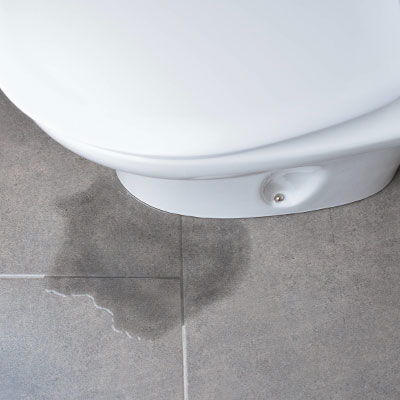
Water pooling around the base of a storage tank, a steady drip from the pressure relief valve (TPR), or moisture on the inlet or outlet fittings all indicate a leak, but the fix depends on the source. A TPR discharging is sometimes normal (the valve doing its job), sometimes a sign of excessive pressure, and sometimes indicates tank failure. A tank leaking from the base itself usually means the inner cylinder has corroded through and the system needs replacing.

Related reading: Hot water system leaking  |  Hot water leak under slab

Banging, whistling, or rumbling noises

Sediment buildup in the base of an electric storage tank creates a rumbling or popping sound as water tries to push through the mineral layer. A high-pitched whistle often means excessive pressure or a partially closed valve. Gas systems can produce a woofing or banging noise when ignition is delayed and accumulated gas lights all at once, this is a safety issue and needs prompt attention.

Related reading: Hot water system making noise

Runs out too quickly

A system that heats fine but runs out after a short shower usually has a failing lower element (on electric), a damaged dip tube allowing hot and cold water to mix, a thermostat set too low, or sediment taking up so much tank volume there’s barely any actual water storage left. On continuous-flow gas systems, this is usually a flow rate issue, the unit is undersized for the demand, or the inlet filter is restricted.

Related reading: How long does a hot water system take to heat up?  |  What size hot water system do I need?

Discoloured, cloudy, or rusty hot water

Brown or rusty hot water usually means the sacrificial anode inside the tank has corroded away and the tank itself has started rusting. This is a strong signal the system is near end-of-life. Cloudy hot water is usually harmless, air dissolved in the water coming out of solution as it heats, but persistent cloudiness with sediment can indicate mineral buildup or a failing tank lining.

Related reading: Brown water from tap  |  Cloudy water from tap  |  Signs your hot water heater needs replacement

Tempering valve problems

Every hot water system installed in NSW residential properties since 1998 is required to have a tempering valve limiting the outlet temperature to 50°C at kitchen, bathroom, and laundry outlets. When these fail, symptoms include lukewarm water, scalding water, or unpredictable temperature swings. Tempering valves are a wear part and typically need replacement every 5–7 years.

Related reading: Hot water tempering valve  |  Hot water temperature in Australia

Shower-specific hot water issues

Hot water working at the basin but not the shower usually points to a mixer cartridge issue, a partially blocked shower inlet, or a failed thermostatic shower valve rather than a hot water system fault. A shower that takes forever to warm up usually indicates a long run from the hot water unit, an undersized continuous flow system, or a partially blocked pipe.

Related reading: No hot water in shower  |  Why shower heats up slowly

Hot water systems we repair and install

We work on every major residential and commercial hot water system type. Different systems fail in different ways, and matching the right repair approach to the right technology is the difference between a system that runs reliably for another decade and a call-out that keeps happening every six months.

Continuous Flow Hot Water

Gas storage and gas continuous flow

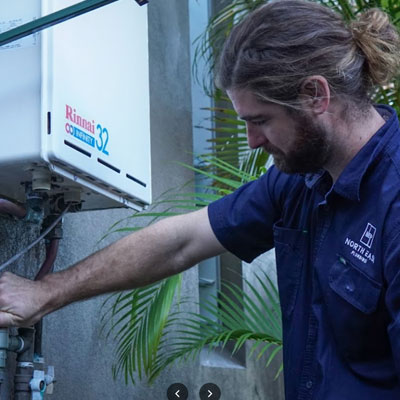
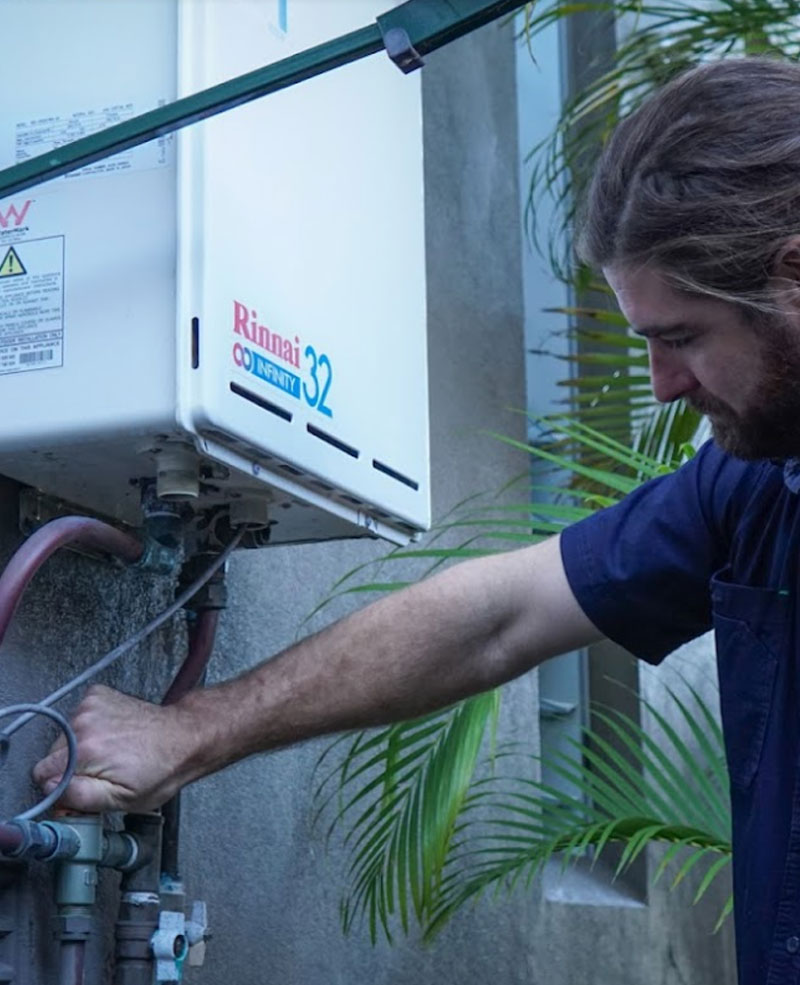
Gas storage units (Rheem Stellar, Vulcan Classic, Dux Prodigy and similar) use a burner to heat water in an insulated tank. Common repair issues include ignition failure, thermocouple faults, pressure relief valve failure, burner blockages, and flue problems. Gas continuous flow systems (Rinnai Infinity, Bosch Highflow, Rheem Metro and similar) heat water on demand rather than storing it. These tend to fail at the flow sensor, the water valve, the heat exchanger, or the electronic control board. We hold gas licences and can work on both residential and commercial gas installations.

Related: Gas fitting services  |  Gas leak repairs

Electric Storage Hot Water

Electric storage

Electric storage systems are the most common residential hot water type across the North Shore and Eastern Suburbs. Repairs typically involve replacing heating elements (upper or lower), failed thermostats, corroded sacrificial anodes, or leaking pressure relief valves. Units on off-peak tariffs (controlled-load metering) have additional wiring considerations, particularly if the off-peak supply has been disconnected or the timer has failed.

Related: How does off-peak hot water work?

Heat Pump Hot Water

Heat pump

Heat pump hot water systems (Sanden, Reclaim Energy, iStore, Chromagen Midea, Rheem Ambiheat and similar) use a refrigeration cycle to extract heat from the surrounding air. They’re energy-efficient but more complex to diagnose when they fail. Common issues include compressor faults, refrigerant leaks, failed fan motors, electronic control board failures, and condensate drain blockages. Heat pump servicing requires familiarity with both refrigeration and hot water systems, we handle both.

Solar Hot Water

Solar hot water

Solar hot water systems (close-coupled roof tanks like Rheem Solar Premier, or split systems like Apricus and Edwards) combine solar collectors with a booster element or gas booster. Typical repairs involve replacing failed circulation pumps, cracked or leaking roof panels, failed boosters, faulty differential controllers, or collector fluid losses. Roof-mounted components need a roof plumbing capability as well, which we have in-house.

Tankless hot water

Tankless / instantaneous electric

Single-point electric instantaneous units (often installed under a kitchen sink or in a laundry) have a limited failure set, usually the heating element, flow switch, or thermostat. These are typically replaced rather than repaired when they fail.

Related: Tankless water heater guide

Brands we service

Gas storage & continuous flow Electric storage Heat pump & solar
Rheem Rheem Sanden
Rinnai Dux Reclaim Energy
Bosch Vulcan iStore
Vulcan Aquamax Chromagen
Dux Saxon Stiebel Eltron
Saxon Thermann Apricus
Thermann Everhot Edwards
Aquamax Hardie Rheem Ambiheat
Repairing hot water North Shore Sydney

Repair or replace? When to make the call

Most hot water systems are worth repairing when they’re under 8–10 years old and the fault is a serviceable component (element, thermostat, tempering valve, TPR, solenoid, ignition). Once the system is past 10 years old and the fault is with the tank itself, rust, leaking base, corroded anode, replacement is almost always the better long-term call. We’ll tell you honestly which side of the line your system falls on.

Repair makes sense when

  • The system is under 8–10 years old
  • The tank is sound and the fault is a serviceable component
  • The parts cost is less than 40–50% of a new system
  • The warranty on the tank still has meaningful time left

Replacement makes sense when

  • The tank itself is leaking from the base
  • The system is over 10–12 years old and has had multiple recent repairs
  • You’ve got brown or rusty hot water (anode and tank both corroded)
  • The electrical or gas setup needs upgrading to meet current standards anyway
  • The current system is genuinely undersized for the household’s demand

Our hot water repair process

1. Diagnose

A licensed plumber attends, diagnoses the fault, and identifies the specific components involved. For gas systems, this usually includes testing gas pressure, ignition, and flue draw. For electric systems, we test element resistance, thermostat operation, and the condition of the sacrificial anode. For heat pump and solar systems, we add refrigeration or collector-specific checks. The $90 inspection fee covers this, no diagnostic labour charged on top.

2. Quote

We provide a fixed-price quote to repair (or, where it’s the better call, to replace). The quote is a single number that covers labour and parts, not an estimate, not hourly. If you proceed, the $90 inspection fee is waived. If you’d rather wait or get another opinion, the $90 covers our time and there’s no pressure to go ahead.

3. Repair

We carry parts for common failures on the major brands, which means many repairs happen on the first visit. Where a part needs ordering, we’ll tell you upfront how long it takes. We clean up after ourselves, shoe covers, drop cloths, and the area left as we found it. Every repair gets a compliance check before we leave.

4. Guarantee

Parts come with the manufacturer’s warranty (minimum 12 months, longer on many brands and many components). Our labour is covered by our Lifetime Labour Guarantee, if the workmanship fails, we come back and fix it, regardless of how long it’s been.

Did you know?

We run 24/7 emergency response across the North Shore and Eastern Suburbs. Call us at any hour and you’ll reach someone who can dispatch a licensed plumber. If it’s an active leak, turn off the water supply to the unit (the isolation valve is usually on the cold inlet). If you can smell gas near the system, turn off the gas at the meter if it’s safe to do so, ventilate the area, and keep ignition sources away.

Pricing

We quote hot water repairs per job, not per hour. The price you’re quoted is the price you pay. There’s no flag-fall, no overtime loading, no mysterious materials line on the invoice.

  • $90 onsite inspection fee — covers diagnosis and the written quote, waived if you proceed with the repair or replacement
  • Fixed-price repair quotes — we tell you the final number before work starts
  • No hourly billing — you’re paying for the outcome, not the clock
  • After-hours and emergency — we quote the same way for 24/7 call-outs, with clear surcharges stated upfront

For cost context on typical hot water repairs, element replacements, thermostat swaps, and tempering valve replacements generally sit in the $350–$650 range including parts. A TPR valve replacement is usually $180–$280. Replacement systems range from roughly $1,600 for a basic electric storage install up to $6,000+ for a premium heat pump or solar setup. Every job gets a specific quote, the ranges above are indicative only.

Frequently Asked Questions

Most common repairs, element replacement, thermostat swap, tempering valve, TPR valve, ignition service, take 45 to 90 minutes once we’re on site. More complex repairs on continuous flow or heat pump systems can take 2–3 hours. If a part needs ordering, we’ll tell you upfront.
For the major brands (Rheem, Rinnai, Dux, Bosch, Vulcan) we hold common parts and can usually complete repairs same-day if we can get to you during business hours. Emergency after-hours call-outs are also same-day, call us and we’ll tell you our honest timeframe.
Electric storage and gas storage systems typically last 10–12 years with normal use. Continuous flow gas systems often last 15+ years with periodic servicing. Heat pumps and solar systems vary more widely — 10–20 years depending on the brand, install quality, and local water conditions. Regular anode replacement can add 5+ years to the life of a storage tank.
Yes, we’re a combined plumbing and electrical business, which matters for hot water work. Electric storage systems, heat pumps, and controlled-load off-peak wiring all need electrical licences as well as plumbing. Having both trades in-house means no delays coordinating separate contractors.

No gimmicks – we charge per job, not per hour.

Our Fixed-Price Guarantee means you’ll know exactly how much your job will cost before we start.

Get a fast quote directly from our licensed plumbers James and Mitch by calling 02 7256 5711 or complete the enquiry form and they’ll be in touch shortly.

North East Plumbing Reviews

4.9 stars out of 300+ reviews

Get Your Fast Quote

James or Mitch will be in touch within minutes
Service Areas

North Shore and Eastern Suburbs of Sydney – We’ve Got You Covered!

We service the entire North Shore and Eastern Suburbs area of Sydney as well as the Newcastle area from our Regional Office. You’ll regularly find us in the following suburbs and surrounding areas.

Master Plumbers NSW Member

Get your fast quote today!

Get a fast quote directly from our licensed plumbers James and Mitch by calling 02 7256 5711 or complete the enquiry form and they’ll be in touch shortly.